From full-moon-party Ko Pha Ngan to peaceful Ko Lanta and the dramatic cliffs of Krabi, Thailand's islands offer something for every kind of traveller.
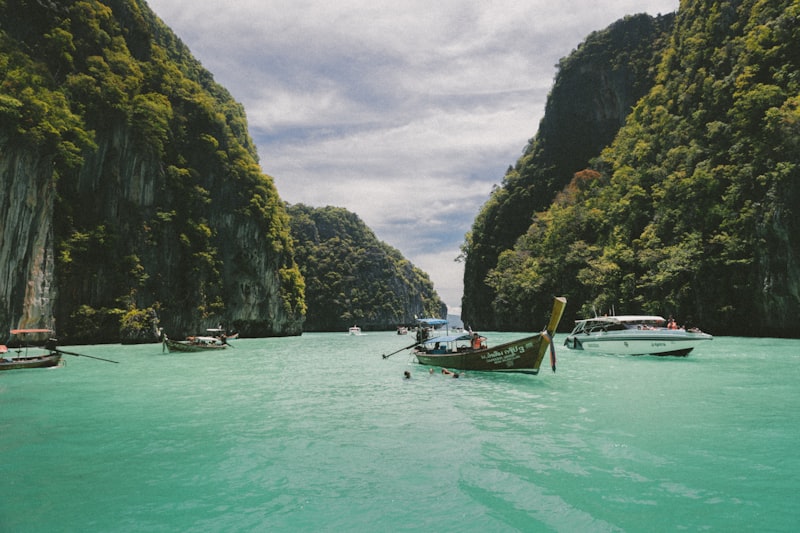
The longtail boat cuts through water so clear you can watch the hull’s shadow race across the sand below. Limestone karsts, shaggy with jungle, jut from the Andaman Sea like the fins of prehistoric creatures. Somewhere behind you, a hammock sways outside a $20-a-night bungalow. Somewhere ahead, a villa with a private infinity pool is waiting. Thailand’s islands have always pulled off this particular trick: every kind of traveller finds exactly the paradise they were looking for.
The best islands in Thailand span two coasts: the Andaman Sea (Phuket, Krabi, Koh Lanta, Koh Phi Phi) and the Gulf of Thailand (Koh Samui, Koh Phangan, Koh Tao). Koh Samui vs Phuket is the most common debate: Samui is calmer and more family-friendly, while Phuket has more infrastructure and better Thailand island hopping connections. These very different worlds sit a few hours apart by boat: you can dive with whale sharks one morning, sip cocktails at a clifftop bar by sunset, and wake the next day in a fishing village where the loudest sound is a rooster. Add fiery curries, warm hospitality, and luxury villas at a fraction of Maldives prices, and the appeal is almost unfair.
Ko Tao: Dive the Gulf of Thailand for Less Ko Tao is one of the best-value places on the planet to learn to dive. A PADI Open Water course typically costs about 10,000 to 13,000 baht (roughly $300 to $400), far less than in Australia or the Caribbean. The Gulf’s star site, Sail Rock, is a granite pinnacle between Ko Tao and Ko Pha Ngan (about 90 minutes by boat from Ko Tao) where whale sharks are most often spotted in the months before June. Crystal Dive in Mae Haad and Big Blue Diving in Sairee are two long-established operators. Non-divers can snorkel the coral at Japanese Gardens off Koh Nang Yuan, a short taxi-boat ride from Sairee Beach.
Railay Beach, Krabi: The Beach You Can Only Reach by Boat Railay is cut off from the mainland by sheer limestone cliffs, and that is exactly its appeal. A shared longtail from Ao Nang beach costs about 100 to 150 baht each way and takes around 15 minutes (boats leave once enough passengers gather). Book a half-day climbing session with one of the climbing schools on Railay East (routes suit all levels), then stay for sunset, when the cliffs turn amber and rose.
Ko Phi Phi: Iconic Views, Worth the Crowds Ko Phi Phi Don gets extremely busy in peak season. Go anyway, but go early. Maya Bay (made famous by the 2000 film The Beach) reopened in 2022 after a long rehabilitation closure; swimming is banned, visitors walk in from a pier at the back of the island, and the bay closes every year from 1 August to 30 September. It opens at 7am, and the first hour, before the speedboat tours arrive, is the best. Expect to pay a 400-baht national park fee. Back on Phi Phi Don, climb to the viewpoint (20 to 30 minutes uphill from the village) for the postcard shot of two bays separated by a narrow strip of land.
Koh Yao Noi: Slow Down in a Fishing Village Most travellers skip Koh Yao Noi, a quiet island in Phang Nga Bay between Phuket and Krabi, which is exactly why you should go. Rent a scooter for a few hundred baht a day and wind past rubber plantations and small mosques. The island is predominantly Muslim and peaceful, with no parties or touts. A dollar or two buys roti and sweet Thai coffee at the morning market. Ask your guesthouse about a longtail fishing trip with local families.
Ko Lanta: The Family-Friendly Favourite Ko Lanta’s west coast is strung with long, flat beaches suited to small children and anyone who finds Phi Phi exhausting. Klong Dao Beach, in the north, has calm water and mid-range resorts with proper pools. Ride a scooter to Lanta Old Town on the east coast, a historic port of wooden stilt shophouses settled by Chinese traders, for lunch overlooking the water.
Budget: On Ko Tao, Sairee Cottage Resort has simple bungalows steps from Sairee’s dive shops at budget prices. On Ko Lanta, Lanta Casuarina Beach Resort offers affordable garden bungalows with easy beach access.
Mid-range: Railay Princess Resort & Spa sits in a garden setting on Railay East with a pool and air-conditioned rooms, a short walk from the famous west beach.
Luxury: Six Senses Yao Noi is one of Southeast Asia’s finest resorts, with private pool villas, an exceptional spa, and jaw-dropping Phang Nga Bay views. Rates typically run well above $600 a night: an unforgettable splurge.
November through April is the golden window for the Andaman coast (Krabi, Ko Lanta, Ko Phi Phi, Koh Yao Noi): clear skies and calm seas. The Gulf islands (Ko Samui, Ko Tao, Ko Pha Ngan) run on a different schedule: their best weather is roughly January to August, and their rainiest months are October to December. November and May are good-value shoulder months on the Andaman side. From June to October, monsoon swells there can cancel boat trips and close some resorts.
Ko Samui has its own airport, about an hour’s flight from Bangkok, with regional connections including Singapore. Phuket International Airport is the main hub for the Andaman islands, with direct flights from across Asia, Australia, and Europe. Ferries and speedboats link all the major islands: Lomprayah and Seatran are reliable in the Gulf, and daily ferries connect Phuket, Krabi, Phi Phi, and Ko Lanta. Longtail boats handle short hops (your guesthouse can arrange them), and budget travellers can take overnight boats from Surat Thani or Chumphon on the mainland to Ko Tao and Ko Pha Ngan.
🎒 Pack for Thailand: Reef-Safe Sunscreen · Waterproof Dry Bag · Snorkel Mask · Quick-Dry Travel Clothing · Waterproof Phone Case
🗺️ Book tours & experiences in Thailand: Browse on GetYourGuide → · Browse on Viator → 🍳 Book a Thai cooking class in Bangkok: Silom Thai Cooking School → 🏯 Skip the line at the Grand Palace & Emerald Buddha: Book on Klook →
🛡️ Travel insurance for this trip: Get covered with SafetyWing → 🔒 Stay secure while travelling: Get NordVPN →
Thailand’s islands have not been a secret for decades. What they have held onto, despite the crowds and the Full Moon Parties, is beauty so extravagant it still catches you off guard. Book the ferry, drop your bag in a bungalow, and order pad thai from the beach cart. The Andaman Sea and the Gulf are waiting, and they are every bit as extraordinary as advertised.