Cairo is ancient history at full scale: the Pyramids of Giza, the Sphinx, the new Grand Egyptian Museum, and a megacity that never fully sleeps. This guide covers the best things to do in Cairo, what to eat, where to stay, and how to visit the Pyramids properly.
Cairo travel guide essentials: things to do in cairo egypt, pyramids of giza, cairo egyptian museum, khan el-khalili bazaar, and where to stay in cairo. Cairo is the largest city in Africa and the Arab world, a megacity of more than 20 million people built around monuments so ancient and so immense that standing beside them resets your sense of human history.
The Pyramids of Giza were already about 2,500 years old when Cleopatra was born. Tutankhamun’s treasures, found largely intact in 1922 after more than 3,000 years underground, now fill the Grand Egyptian Museum. The Khan el-Khalili bazaar has been trading since the 1380s. In Cairo, history is not behind glass: medieval mosques line busy streets, and the call to prayer echoes across a skyline of ancient minarets and modern towers.
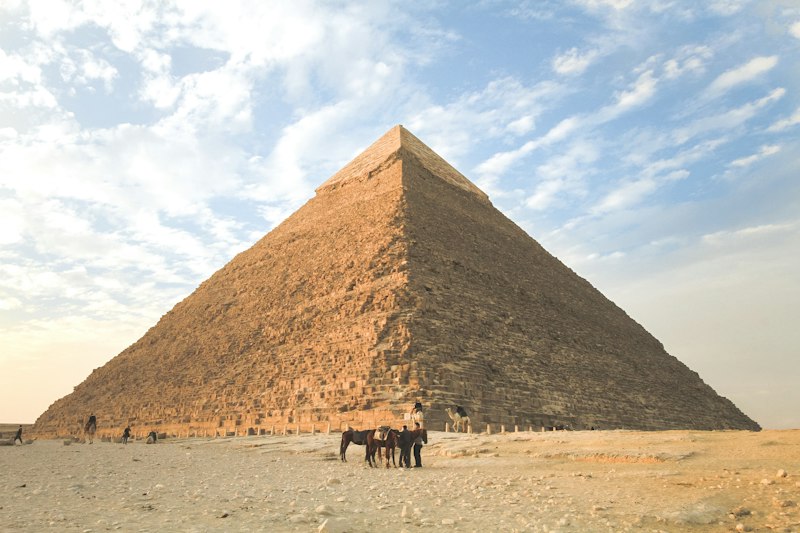
The Great Pyramid is the only surviving wonder of the ancient world, and no photograph prepares you for it. Built around 2560 BC from roughly 2.3 million limestone blocks averaging 2.5 tonnes each, it still stands about 138 metres tall (originally close to 147). Standing at its base, the mind struggles to process what people accomplished here.
But Cairo is not only the Pyramids. Its museums hold the world’s greatest collections of ancient Egyptian artifacts. Historic Islamic Cairo is a UNESCO World Heritage Site of extraordinary density. The food (koshari, ful medames, kofta, bread fresh from street ovens) is excellent. And the city runs on a chaotic warmth all its own: louder, more disorganized, more generous, and more alive than almost anywhere.
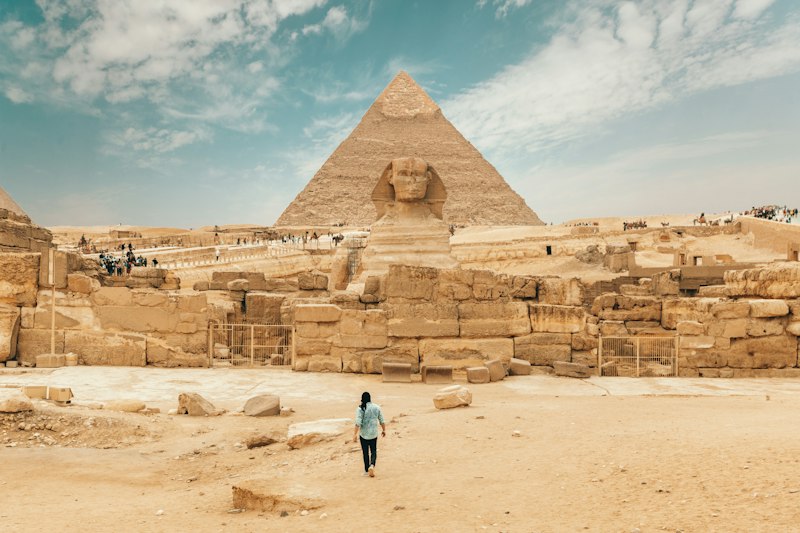
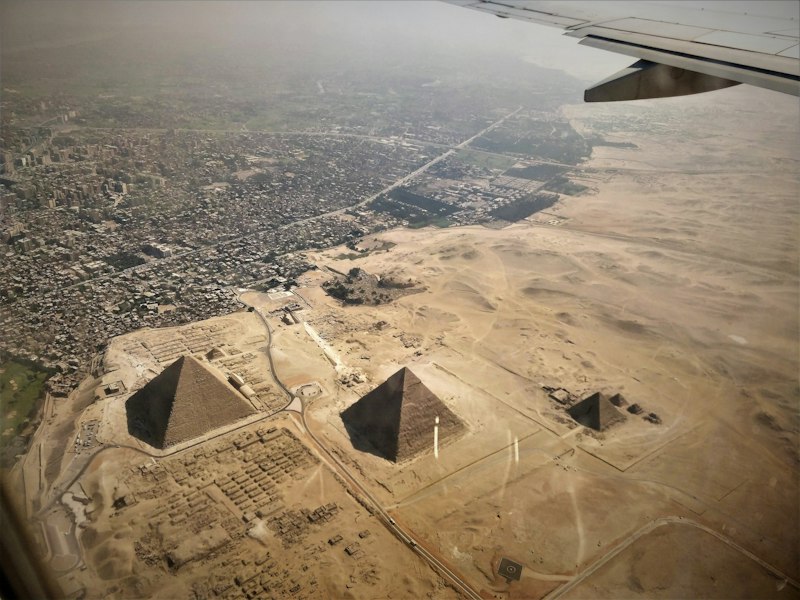
The Giza Plateau sits on Cairo’s western edge, often an hour from downtown in traffic. It holds the pyramids of Khufu, Khafre, and Menkaure, the Great Sphinx, and smaller queens’ pyramids and temples. Allow a full morning at least.
The Great Pyramid of Khufu: The largest of the three. A separate interior ticket (1,500 EGP since January 2025) lets you climb a narrow passage and the Grand Gallery to the King’s Chamber, where the granite sarcophagus still sits. It is hot and cramped, and worth doing once. Cheaper interior tickets are sold for the pyramids of Khafre and Menkaure.
The Sphinx: About 73 metres long and 20 metres high, carved from the bedrock of the plateau around 2500 BC. Popular legend blames Napoleon’s soldiers for the missing nose, but it was damaged centuries earlier. The Sphinx faces the rising sun, so come early.
Practical tips: General entry is 700 EGP (about $14), paid by card. The site opens at 7am; arrive then, before the heat and the tour buses. A newer visitor centre and electric shuttle buses now serve the plateau. Camel and horse handlers are persistent, so agree a price before you mount anything. A licensed guide adds the context the site itself provides poorly. Khufu’s famous solar boat has moved to the Grand Egyptian Museum.
The Sound and Light Show: Evening shows still run at the foot of the Sphinx in several languages, with tickets around $20 to $25. The script is dated, but the floodlit pyramids are worth seeing.
The Grand Egyptian Museum (GEM), beside the Giza Plateau, officially opened in November 2025 and is now the headline museum visit. It displays the complete Tutankhamun collection of more than 5,000 objects, including the golden mask and coffins, plus Khufu’s reconstructed solar boat. Foreign adult tickets run about 1,450 to 1,600 EGP; book timed tickets online and pair it with the Pyramids.
The historic Egyptian Museum on Tahrir Square (1902) remains worth two hours for its crowded, old-school galleries of statues, jewellery, and sarcophagi. Entry is 550 EGP. The royal mummies, including Ramesses II, moved in 2021 to the National Museum of Egyptian Civilization (NMEC) in Fustat, near Coptic Cairo (500 to 550 EGP). Ticket prices change often, so check the official Egyptian monuments portal (egymonuments.gov.eg) before you go.
Founded in the late 14th century, Khan el-Khalili is still Cairo’s most atmospheric market: covered lanes selling spices, perfumes, gold and silver, papyrus, alabaster, leather, and every form of souvenir. The lanes by the main entrance are tourist-heavy and priced accordingly. Walk further in and the market grows more local and considerably cheaper.
El Fishawi café, serving since the late 18th century and open around the clock, is one of Cairo’s oldest. Sit with a mint tea and let the market flow past.
The medieval district around Khan el-Khalili holds hundreds of listed monuments (mosques, mausoleums, madrasas, and caravanserais) in a walkable area inhabited since the Fatimids founded Cairo in 969 AD.
Al-Azhar Mosque: Begun in 970 AD and one of the world’s oldest centres of learning, still a leading seat of Islamic scholarship. Non-Muslims may enter in modest dress. The courtyard is peaceful and beautiful.
Ibn Tulun Mosque: Built between 876 and 879 AD, it is Cairo’s oldest mosque surviving in its original form. Its minaret has a unique external spiral staircase, and the vast courtyard is one of the finest in the Islamic world. Entry is free.
The Citadel of Saladin: Begun by Saladin in the 12th century on a hill above the city, it is crowned by the Ottoman-style Mosque of Muhammad Ali, built from 1830 onward, whose twin minarets are visible across Cairo. On clear days the views reach the Pyramids. Entry is 550 EGP.
Old Cairo (Mar Girgis metro station) holds some of Egypt’s oldest Christian sites: the Hanging Church (Al-Mu’allaqa), perched on a gatehouse of the Roman Babylon Fortress; the Coptic Museum (280 EGP), with the world’s largest collection of Coptic art; and the Church of Abu Serga, said to stand over a cave where the Holy Family sheltered. The quiet, shaded lanes are a complete contrast to the city above. NMEC is a short ride away.
Traditional lateen-sailed feluccas can be hired by the hour from the Corniche in central Cairo. A sunset hour on the Nile, watching the towers catch the evening light, costs a few hundred Egyptian pounds for the whole boat. Agree the price and duration before boarding.
Koshari: Egypt’s national dish: rice, lentils, macaroni, and chickpeas topped with crispy onions, spiced tomato sauce, and garlic vinegar. A bowl costs roughly 40 to 100 EGP (about $1 to $2). Koshary Abou Tarek near downtown is the most famous address; street carts serve it everywhere.
Ful medames: Slow-cooked fava beans with oil, lemon, and cumin, eaten with fresh bread. Egypt’s essential breakfast, sold from early morning at carts and small restaurants for pocket change.
Kofta: Spiced minced meat grilled over charcoal and served with rice, salad, and tahini. Look for a busy kababgy (grill house).
Feteer meshaltet: Flaky layered pastry, somewhere between a crepe and a pie, served sweet with honey or savoury with cheese or meat.
Mahshi: Grape leaves, courgettes, aubergines, and peppers stuffed with herbed rice and simmered. A staple of Egyptian home cooking.
Fresh juice: Juice bars press mango, guava, pomegranate, and sugar cane to order for very little. One of the city’s small pleasures.
Nightly rates below are rough guides; check current prices when booking.
Budget: Lotus Hotel, Downtown: A long-running backpacker favourite within walking distance of the Egyptian Museum.
Mid-range: Le Riad Hotel de Charme, Islamic Cairo: A boutique hotel on historic Al-Muizz Street, with themed rooms and a roof terrace in the heart of the medieval city. Kempinski Nile Hotel, Garden City: Upper mid-range to luxury, right on the Nile with a rooftop pool and river views.
Splurge: Four Seasons Cairo at Nile Plaza: On the Nile in Garden City, with consistently excellent service, several restaurants, and a spa. Marriott Mena House, Giza: Built in 1869 as a khedival hunting lodge and a hotel since 1886, at the foot of the Pyramids. Many rooms have direct Pyramid views and it is a short ride to the GEM.
October to April is best: mild temperatures (15 to 25 degrees) and comfortable conditions for outdoor sites. December to February nights can be cool (10 to 15 degrees). March and April are warm and often beautiful.
May to September is very hot, often 35 to 40 degrees or more in July and August. If you travel in summer, visit sites at dawn and retreat to air-conditioned museums by mid-morning.
Ramadan: The city comes alive at night with iftars, street food, and a communal energy unlike any other time. Daytime dining is limited, but the atmosphere is extraordinary. Ramadan moves about 11 days earlier each year, so check dates before booking.
Cairo International Airport is about 22 kilometres northeast of downtown. Use the official taxi or limousine desks in arrivals and confirm the fare first, or book an Uber from the designated pickup area. No metro line reaches the airport.
In the city, Uber is the most practical option for visitors: priced upfront, tracked, and inexpensive. For street taxis, agree the fare before getting in. The Cairo Metro is cheap (10 to 20 EGP depending on distance): Line 1 links Sadat station (Tahrir Square) with Mar Girgis for Coptic Cairo.
🎒 Pack for Cairo: Lightweight Modest Clothing Women · Travel Scarf Head Cover · Reef-Safe Sunscreen SPF 50 · Anti-Theft Crossbody Bag · Insect Repellent DEET Travel
🗺️ Book Cairo tours and experiences: Pyramids of Giza guided tours on GetYourGuide Grand Egyptian Museum and Islamic Cairo tours on GetYourGuide Cairo day tours on Viator Cairo experiences on Klook
🛡️ Travel insurance for Egypt: Get covered with SafetyWing → 🔒 Stay secure on public Wi-Fi: Get NordVPN →
Cairo is not comfortable the way Tokyo or Copenhagen are comfortable. It is loud, the traffic is terrifying, and the summer heat is relentless. None of that is the point. The point is standing beside something people built 4,500 years ago that still points at the sky. It is Tutankhamun’s gold mask, a bowl of koshari at a plastic table, and the call to prayer from a thousand-year-old minaret at dusk. Cairo is not comfortable. It is extraordinary.