Machu Picchu and the Sacred Valley together make one of the world's great travel experiences. This guide covers tickets, getting there, when to go, and what to do beyond the citadel.
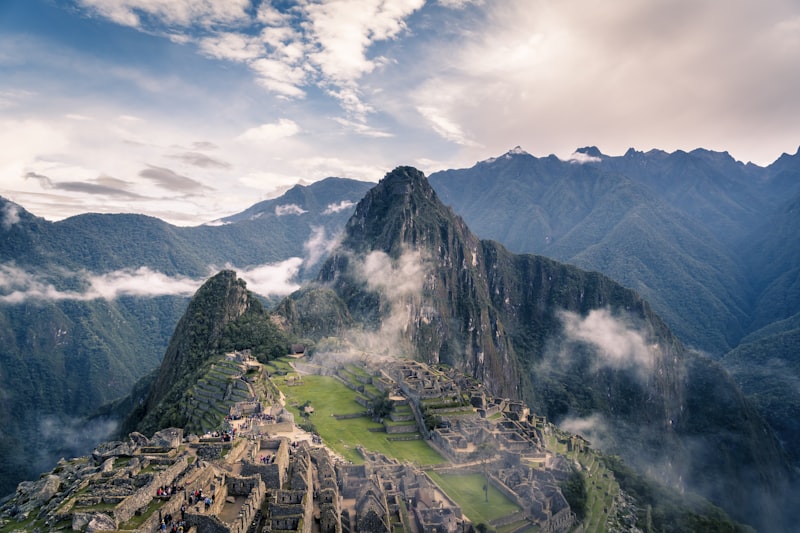
The bus lurches around the final switchback and suddenly there it is: a city in the clouds, its stone terraces stepping down toward valleys swallowed by mist. Your breath catches, partly from the altitude, partly from something older and harder to name. Machu Picchu doesn’t ease you in. Pale granite walls rise from emerald mountainside, llamas graze on the terraces, and the Urubamba River coils silver far below. The Incas built this citadel around 1450, fitting stones so precisely that no mortar was needed, then abandoned it about a century later. The Spanish never recorded it. When Hiram Bingham arrived in 1911, led up the mountain by local farmers who already knew the site, he brought it to the world’s attention. Standing here now, you understand his astonishment.
Many famous wonders disappoint in person. Machu Picchu does the opposite: photographs can’t capture its scale or drama. But Peru’s appeal stretches beyond a single ruin. The classic Cusco, Sacred Valley, and Machu Picchu route is one of South America’s great journeys, and the Sacred Valley is a patchwork of Andean villages, snowcapped peaks, and indigenous markets. Lima is one of the world’s great culinary cities. And the journeys in between, by train through cloud forest or on foot along the Inca Trail, are experiences in their own right.
Machu Picchu Early Morning Buses up to the citadel leave Aguas Calientes from about 5:30am, and the first entry slots start at 6am. That first hour, when mist still clings to the terraces, is magical. Since 2024 visits follow fixed one-way circuits with timed entry: Circuit 1 and 2 include the classic upper viewpoints, while Circuit 3 explores the lower sectors and pairs with hikes such as Huayna Picchu. Foreign adult tickets cost roughly S/150 to S/200 (about $45 to $60) depending on the route. Buy them only through the official Ministry of Culture site (tuboleto.cultura.pe) or a licensed agency, and book months ahead for June to August, when daily slots sell out.
Huayna Picchu Mountain The steep path up Huayna Picchu, the peak rising behind the classic Machu Picchu photo, takes roughly an hour up and rewards climbers with a vertiginous view over the whole citadel. Numbers are strictly capped with timed morning entries, so book as soon as you know your dates. The trail has narrow stone steps and exposed sections with cables; skip it if you fear heights. Machu Picchu Mountain is a longer, less vertiginous alternative with its own ticket.
The Sacred Valley: Pisac and Ollantaytambo Spend at least two days in the Sacred Valley before visiting Machu Picchu. Its lower altitude (around 2,800 to 3,000 metres) makes it a gentler place to acclimatise than Cusco. Pisac’s market is busiest on Sundays, when vendors sell hand-woven textiles and crafts; afterwards, hike to the Pisac ruins above town for sweeping views. Then stay in Ollantaytambo, a living Inca town where water channels still run through the cobbled streets. Its fortress, with steep terraces and enormous pink stone blocks, is one of the most impressive Inca sites in Peru and far less crowded than Machu Picchu.
The Inca Trail vs. Salkantay Trek The classic four-day Inca Trail ends at Inti Punku (the Sun Gate), where you get your first glimpse of Machu Picchu after days of high passes and cloud forest. Permits allow 500 people per day, only about 200 of them trekkers (the rest are guides and porters). You must book through a licensed operator, permits are tied to your passport, and high-season dates sell out months ahead. The trail closes every February for maintenance. If permits are gone, the five-day Salkantay Trek is a worthy, usually cheaper alternative, crossing a pass of roughly 4,600m beneath a glacier. Both routes end near Aguas Calientes.
Lima’s Food Scene Before or after the mountains, spend two nights in Lima. Central and Maido are fixtures on the World’s 50 Best Restaurants list, but the city’s real magic is its casual cevicherías and market stalls. Try ceviche at Mercado de Surquillo on a weekday morning, then a pisco sour at a Miraflores bar overlooking the Pacific. Lomo saltado, stir-fried beef with tomato, onion, and fries, is the affordable, satisfying everyday option.
Budget, Cusco: Cusco’s San Blas and Plaza San Francisco areas are packed with well-rated hostels offering dorms and private rooms from about $20 to $40. Choose one with a tour desk to help with trek bookings.
Luxury, Inkaterra La Casona, Cusco: A 16th-century colonial mansion on Plaza Nazarenas turned boutique hotel, with just 11 suites featuring fireplaces and heated floors. Expect premium rates.
Splurge, Belmond Sanctuary Lodge, Machu Picchu: The only hotel at the citadel’s entrance, letting you explore in the late afternoon and early morning when day-trippers are gone. Rates typically start well above $1,000 per night.
The dry season runs May to October, prime time for the Inca Trail, with clear skies, cold nights, and full mountain views. June to August is peak season; book everything months ahead. May and September offer better availability. The wet season (November to April) brings frequent rain and occasional landslides, and the Inca Trail closes in February, though Machu Picchu stays open and crowds thin.
Fly into Lima’s Jorge Chávez International Airport, then connect to Cusco’s Alejandro Velasco Astete Airport (about 1 hour 15 minutes). A new airport at Chinchero is under construction but not expected to open before late 2027. Cusco sits at about 3,400m, so many travellers head straight down to the Sacred Valley to acclimatise and visit Cusco at the end. PeruRail and Inca Rail run trains from Ollantaytambo to Aguas Calientes (about 1 hour 45 minutes), with one-way fares typically starting around $60 and climbing steeply for panoramic and luxury services. The bus from Aguas Calientes up to the citadel costs about $12 each way. Taxis and colectivos connect Sacred Valley towns cheaply.
🎒 Pack for Peru: Altitude Sickness Relief · Trekking Poles · Waterproof Hiking Boots · Packable Rain Jacket · Travel Money Belt
🗺️ Book tours & experiences in Peru: Browse on GetYourGuide → · Browse on Viator → 🏛️ Machu Picchu guided tour: Book on Klook →
🛡️ Travel insurance for this trip: Get covered with SafetyWing → 🔒 Stay secure while travelling: Get NordVPN →
Peru recalibrates your sense of what humans are capable of. Standing in a citadel built on a mountaintop without iron tools, with cloud forest below and condors riding the thermals, the ordinary world feels very far away. Book the trip. Take the extra acclimatisation day. Some experiences genuinely change you, and Machu Picchu is one of them.