Fes is Morocco's oldest imperial city and its most disorienting. Here's how to spend 48 hours in the medina without getting lost, and why getting lost is half the point.
The alley narrows until your shoulders nearly graze the cool stone walls, then opens without warning into a riot of colour and noise: a spice vendor’s bowls heaped with turmeric and cumin, a boy on a donkey nudging past with a cheerful shout, the call to prayer spiralling up from a minaret you cannot see. This is Fes el-Bali, founded in 789 AD and still medieval in spirit. The air smells of cedar sawdust, curing hides, and orange blossom water from a pastry stall around the corner. No cars enter this labyrinth of some 9,000 alleys (by popular count), and no GPS can reliably find you. Somewhere in that bewildering lostness, Fes reveals itself as one of the most extraordinary places on earth.
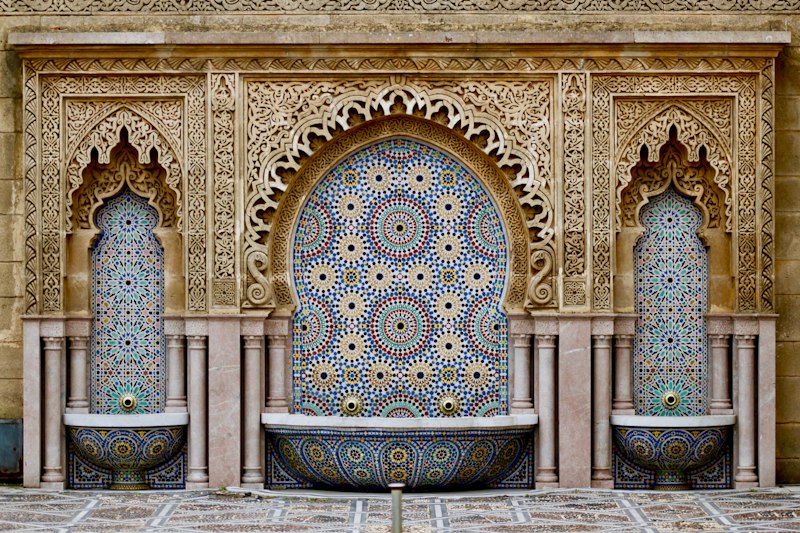
Morocco pulls travellers in many directions (the dunes of Merzouga, the blue lanes of Chefchaouen, the chaos of Marrakech’s Jemaa el-Fna), but Fes is the country’s intellectual and spiritual heart. It is home to Al-Qarawiyyin, founded in 859 AD and cited by UNESCO and Guinness World Records as the world’s oldest continuously operating university. Here, every carved plaster panel and hand-cut zellige tile feels devotional. This Fes Morocco travel guide covers what to do in Fes across 48 hours, from the dyers’ quarter to the ancient university. For independent travellers who want more than surface-level tourism, Fes offers layers: ancient scholarship, living craft traditions, and a UNESCO-listed medina where the 21st century feels optional.
Get deliberately lost in Fes el-Bali. The medina cannot be conquered with a map, so commit to wandering. Pick a direction after breakfast, say yes to every open courtyard, and trust that the two main thoroughfares, Talaa Kebira and Talaa Seghira, will eventually find you. When unofficial guides approach and you are not interested, a calm, firm “la, shukran” (no, thank you) works best. If you want guidance, hire a licensed guide through your riad or the tourist office; expect roughly 300 to 500 MAD (about $30 to $50) for a half-day, and you will learn far more than wandering alone could teach you.
See the Chouara Tannery from above. Said to date back to the 11th century, the city’s most famous tannery is best viewed from the leather shops on the surrounding terraces. A honeycomb of stone vats filled with dyes and white lime spreads below like a painter’s palette. The smell is powerful, and shopkeepers hand out sprigs of mint to hold under your nose. Visit in the morning, when workers are most active and the light is best. You are not obliged to buy, but the bags and babouche slippers are beautiful.
Explore the Bou Inania Madrasa. Built between 1350 and 1355 under the Marinid sultan Abu Inan Faris, this Quranic school is one of the few religious buildings in Fes open to non-Muslim visitors, and the finest. Stand in the courtyard and let your eyes travel upward: carved cedar, stucco worked like lace, and at the top, open sky. Admission is around 20 to 30 MAD. Come mid-morning on a weekday for a quieter courtyard.
Experience a traditional hammam. Neighbourhood hammams are where Fassis have socialised and bathed for generations. Ask your riad to recommend one that welcomes visitors and explain the etiquette (bring flip-flops, a change of clothes, and a kessa exfoliating glove). Entry to a local hammam costs very little, with a scrub typically adding around 50 to 100 MAD; spa-style hammams charge several hundred dirhams. It is not a luxury spa but something better: a slice of daily life.
Eat your way through the medina. Pastilla, a flaky pastry traditionally filled with pigeon (often chicken today), almonds, and a dusting of cinnamon sugar, is the Fassi signature. Family-run Dar Hatim in the medina is a well-loved place to try it. Harira, a thick soup of tomato, lentils, and lamb, breaks the Ramadan fast and is served year-round. End every meal with mint tea poured from a height for froth, and never refuse a second glass.
Budget: Simple family-run dars and guesthouses inside the medina offer rooftop terraces and breakfast at low prices. Check recent reviews for location, since some are deep in the lanes.
Mid-range: Riad Laaroussa is a restored 17th-century house with a handful of individually decorated rooms around a leafy fountain courtyard, and staff who know the medina intimately. Dar Bensouda, a traditional riad in Fes el-Bali, is another beautifully restored option. Expect roughly $120 to $250 per night with breakfast.
Luxury: Palais Faraj Suites & Spa sits on the edge of the medina with sweeping views over the rooftops, a spa and hammam, and rooms that feel like a Moroccan art museum. Expect from around $200 per night.
March to May is the sweet spot: comfortable temperatures of 18 to 25°C, spring flowers, and a busy but not overwhelming medina. September and October are similar, with fewer crowds. June to August brings heat above 35°C in the narrow streets. Ramadan dates shift each year; expect reduced daytime restaurant hours and a medina that pulses with energy after sunset.
Fes-Saïss Airport (FEZ) has direct flights from London Stansted, Paris, Brussels, and other European cities, with Ryanair, Air Arabia Maroc, and Royal Air Maroc among the carriers, often at budget fares. Within Morocco, ONCF trains link Fes with Casablanca (about 3.5 to 4 hours) and Marrakech (about 7 hours). The medina itself is car-free: you walk, and donkeys carry the loads. Petit taxis are cheap for reaching the Ville Nouvelle or the station. Meknes is under an hour by train, and a grand taxi day trip to Meknes and the Roman ruins of Volubilis runs roughly 600 to 900 MAD for the car.
🎒 Pack for Morocco: Lightweight Travel Scarf · Comfortable Walking Sandals · Anti-Theft Crossbody Bag · Universal Travel Adapter · Travel Packing Cubes
🗺️ Book tours & experiences in Fes: Browse on GetYourGuide → · Browse on Viator → 🕌 Fes medina guided walking tour: Book on Klook →
🛡️ Travel insurance for this trip: Get covered with SafetyWing → 🔒 Stay secure while travelling: Get NordVPN →
Some cities you visit, and some visit you long after you leave, returning in the smell of leather on a warm day or a muezzin’s call through a half-open window. Fes is the second kind. Book a few nights in a riad, get completely lost at least once, and trust the medina to give you back to yourself, slightly changed and glad you came.