Paris is not a cliché. It is one of the world's genuinely great cities: extraordinary museums, a legendary food culture, beautiful neighbourhoods, and that view. This guide covers 4 days in Paris, from the Eiffel Tower to the best croissant you will ever eat.
The view from the Pont de la Tournelle at dawn validates every superlative ever written about Paris. The Seine runs grey-green below, the towers of Notre-Dame are pale against the sky, the stone buildings of the Ile Saint-Louis are still in shadow, and the light from the east is just finding the rooftops. A cyclist crosses. A barge slides underneath. Two women with baguettes under their arms walk fast along the quai. You will photograph this, but the photograph will not be this.
This paris travel guide covers things to do in paris, paris in 4 days, the best paris food, eiffel tower tips, and the best paris neighbourhoods. Paris is the city everyone has seen before they arrive, which makes arriving strangely disorienting: it really does look like the photographs, and it really is better than they suggested. The Eiffel Tower is extraordinary in person, the Louvre holds one of the world’s greatest collections, and the neighbourhoods have the quality of light that drew painters here for two centuries. Few destinations earn their reputation so completely.
Paris is one of the most visited cities on earth, and it is easy to see why. It packs in world-class art, architecture, and food at a density few cities match. The Louvre alone, the world’s most visited museum, could absorb a week. The food culture, from three-star dining rooms to sidewalk cafes in the Marais, sets the standard for everywhere else. And the city is beautiful in an unhurried way: boulevards, limestone facades, and zinc rooftops add up to a visual coherence other great cities lack.
Paris is also a superb base. High-speed trains reach Brussels in under 1.5 hours, Lyon in about 2 hours, London in roughly 2.5 hours, and Amsterdam in about 3.5 hours. Versailles and Reims (about 45 minutes by TGV) make easy day trips.
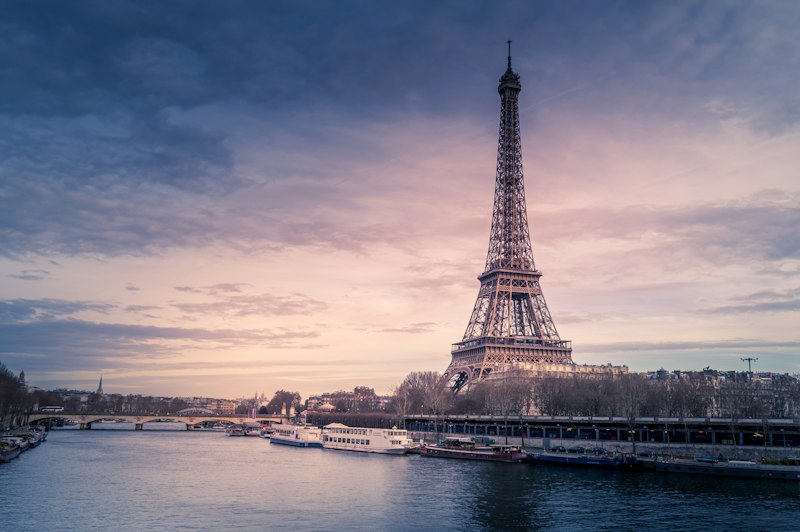
Book at ticket.toureiffel.paris before you arrive. In 2026 a lift ticket to the summit (276 metres) costs €36.70, and a lift ticket to the second floor, which is genuinely high enough, costs €23.50. Taking the stairs to the second floor is cheapest at €14.80. Summer queues for tickets on the day can run for hours, so a timed advance booking is essential.
The tower is best at three moments: early morning, when it is quietest; sunset, when the light on the Seine is extraordinary; and after dark, when it sparkles for five minutes every hour on the hour. Built for the 1889 World’s Fair, it was meant to come down after 20 years. Gustave Eiffel saved it by proving its value as a radio transmission tower.
The Louvre is the world’s largest art museum and its most visited, with about 9 million visitors in 2025. Book a timed entry at ticketlouvre.fr: since January 2026, tickets cost €32 for visitors from outside the European Economic Area and €22 for EEA residents. The Mona Lisa is smaller than you expect, and its fame owes a lot to its 1911 theft, which became a global media sensation. The real highlights are what many visitors rush past: the Egyptian and Near Eastern antiquities, early Italian painting, and the soaring Winged Victory of Samothrace.
Give yourself at least three hours. The building, a former royal palace, is part of the experience, and the gilded Napoleon III apartments are a showstopper.
The Musée d’Orsay (musee-orsay.fr, €16 online), in a converted Beaux-Arts railway station on the Left Bank, holds the world’s finest Impressionist collection: Monet, Van Gogh, Degas, Renoir, Cézanne, Seurat. All visitors now need a timed slot. Come on a Thursday, when the museum stays open until 9:45pm and evening tickets from 6pm are cheaper.
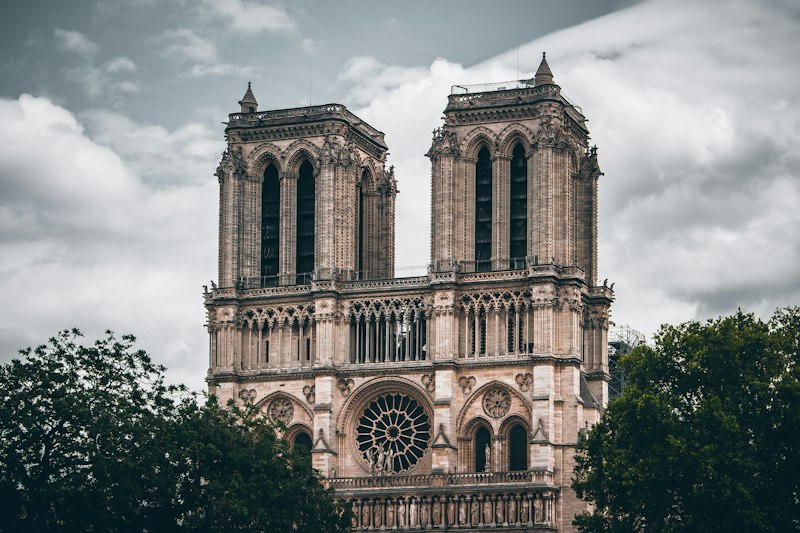
After the April 2019 fire destroyed its spire and roof, Notre-Dame reopened in December 2024 following a remarkable five-year restoration. The interior gleams: the pale stone nave, the medieval rose windows, and the restored choir. Entry is free; reserving a slot at notredamedeparis.fr is optional but shortens the wait. The bell towers reopened in September 2025 (€16, booked online in advance).
Louis XIV’s Palace of Versailles is the grandest surviving statement of 17th-century royal power: hundreds of opulent rooms, the 73-metre Hall of Mirrors, the Trianon estate, and gardens that stretch to the horizon. Take the RER C from Left Bank stations such as Saint-Michel or Invalides to Versailles Château Rive Gauche (around 40 minutes, a short walk to the gates). The 2026 Passport ticket, covering the palace, gardens, and Trianon, costs €35 from April to October and €25 from November to March (a little less for EEA residents); book at chateauversailles.fr. The palace opens at 9am and is closed on Mondays. Arrive at opening and head straight for the Hall of Mirrors.
The Marais (3rd and 4th arrondissements) is the most historically layered neighbourhood in Paris. The Place des Vosges, inaugurated in 1612, is the city’s oldest planned square and still one of its loveliest, its arcades sheltering galleries and cafes. Nearby are the Jewish quarter around Rue des Rosiers (L’As du Fallafel serves its famous pita for under €10), the Museum of Jewish Art and History, and the Musée Picasso. The Marais is also one of the few areas where many shops open on Sundays.
The Sacré-Coeur Basilica crowns Montmartre hill. Walk up rather than taking the funicular: the stairways and lanes of the old village are the whole point. The Place du Tertre is very touristy, but streets a block away (Rue Lepic, Rue des Abbesses) keep the feel of the artists’ quarter where Renoir, Toulouse-Lautrec, and later Picasso lived and worked. Come at sunset for the view south across the city.
Croissants: A great croissant is shatteringly crisp outside, honeycomb-light inside, and deeply buttery. Du Pain et des Idées in the 10th and La Maison d’Isabelle in the 5th (named best butter croissant in Paris in 2018) are both worth a special trip. Expect to pay a couple of euros.
Steak frites: The quintessential brasserie meal: entrecôte or bavette cooked rare, hand-cut fries, and a green salad with Dijon vinaigrette. Le Relais de l’Entrecôte (Saint-Germain and Montparnasse) serves nothing else, with its famous sauce, for roughly €28 to €35. No reservations: arrive at opening or expect a queue.
Steak tartare: Raw minced beef with capers, shallots, cornichons, Dijon, and egg yolk. Brasserie Lipp on Boulevard Saint-Germain is a classic place to order it.
Onion soup (soupe à l’oignon): Caramelised onion broth under a bread crouton and a bubbling layer of melted cheese. Au Pied de Cochon near Les Halles, open around the clock since 1947, is the traditional place to eat it.
Wine: Order the house red (carafe de rouge) in any brasserie; entry-level wine by the glass rarely disappoints. Le Baron Rouge in the 12th pours wine straight from the barrel to a standing crowd. Extremely Parisian.
Fine dining: Paris is one of the world’s great Michelin cities. L’Arpège (three stars), Guy Savoy, and Le Taillevent (both two stars) are long-running institutions. Book well ahead, and look at lunch menus, which cost far less than dinner.
Paris hotel prices have climbed sharply, so treat these as typical starting rates that vary widely by season.
Good value ($200 to $300/night): Hôtel Jeanne d’Arc Le Marais: Old-fashioned and charming, a two-minute walk from the Place des Vosges. Often from around $200.
Boutique Hôtel de la Place des Vosges: A small, historic hotel with exposed beams, steps from the square.
Boutique ($250 to $450/night): Hôtel Fabric, 11th arrondissement: A converted 19th-century textile factory with 33 rooms and a hammam, between the Marais and Canal Saint-Martin. From around $250.
Hôtel du Petit Moulin, Marais: A former bakery with 17 rooms and a junior suite, each decorated by Christian Lacroix. From around $300.
Splurge ($1,000+/night): Le Bristol: The grande dame of Parisian palace hotels on the Rue du Faubourg Saint-Honoré, with a garden and the three-star Epicure restaurant. From around $1,400.
Hôtel Costes: A fashion-world favourite on the Rue Saint-Honoré, with a famous courtyard restaurant and a lobby that feels like a very expensive club. From around $1,000.
April and May are the best months: the chestnut trees bloom, days are mild (typically 15 to 22 degrees), and crowds have not peaked.
September and October are nearly as good: crowds thin from mid-September, temperatures are comfortable, and the cultural season is in full swing, including Fashion Week.
June to August: June is excellent. July and August are peak crowd season, and in August many Parisians leave on holiday and smaller restaurants and shops close for weeks.
November to March: Quiet, cold (roughly 3 to 8 degrees in January), and better value. December brings lights and Christmas markets; January is the quietest month.
Charles de Gaulle Airport (CDG) is about 25 kilometres north of the city. The RER B reaches Gare du Nord and Châtelet-Les Halles in around 35 minutes on the Paris Region airports ticket (about €14). Taxis charge a fixed fare: €56 to the Right Bank or €65 to the Left Bank.
Orly Airport (ORY) is about 14 kilometres south. Metro Line 14 now runs to Orly, reaching Châtelet in roughly 25 minutes on the same airports ticket. Fixed taxi fares are €36 to the Left Bank and €45 to the Right Bank.
Within Paris, the Metro is fast and comprehensive, and walking between central sights is a pleasure. For a few rides, load tickets onto a Navigo Easy card or your phone; for a full week, a Navigo Découverte card (€5 plus a photo) with a weekly pass is usually better value.
🎒 Pack for Paris: Comfortable Walking Shoes Cobblestone · Anti-Theft Crossbody Bag · Lightweight Trench Coat Women · Compact Reusable Tote Bag · Universal Travel Adapter Europe
🗺️ Book Paris tours and experiences: Eiffel Tower summit access tour on GetYourGuide Louvre Museum guided tour on GetYourGuide Paris food tours and Seine cruises on Viator Paris experiences on Klook
🛡️ Travel insurance for Europe: Get covered with SafetyWing → 🔒 Stay secure on public Wi-Fi: Get NordVPN →
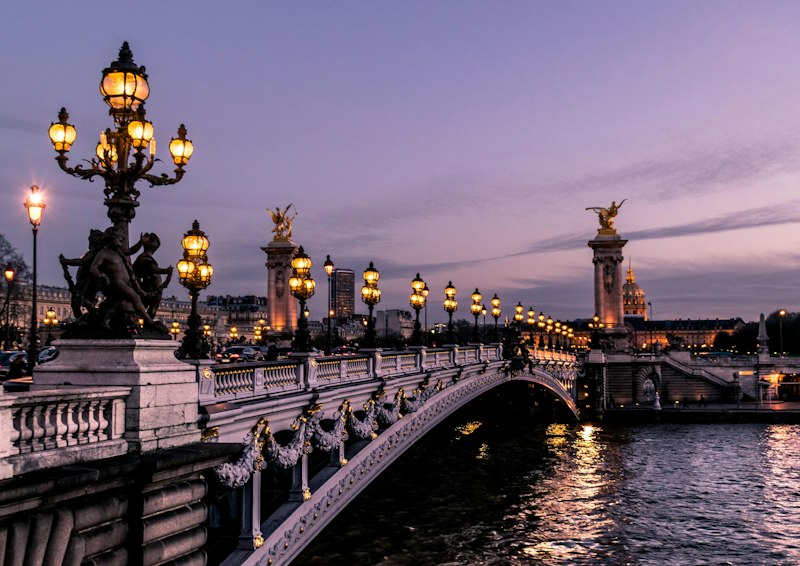
Paris earns its reputation the straightforward way: by being as good as advertised. The food is that good, the light is that beautiful, and the Seine really does look like that at dusk from the right bridge. Go in spring if you can, eat as much as possible, and come back.