Kilimanjaro is Africa's highest peak and a more achievable climb than most people expect, if you prepare correctly. Here's what the guides don't tell you until you're already on the mountain.
The alarm sounds at midnight, and for a moment you forget where you are. Then the cold hits: not brisk, but a bone-deep, lung-clenching cold that turns your sleeping bag into a flimsy suggestion. You pull on every layer you own, lace your boots with stiff fingers, and step out of the tent at Barafu Camp into a sky so thick with stars it looks painted. Somewhere above you in the darkness is Uhuru Peak, 5,895 metres above sea level, the highest point in Africa. Your guide says simply, “Pole, pole.” Slowly, slowly. You nod, plant your trekking pole in the volcanic scree, and begin what may be the hardest and most extraordinary thing you ever do.
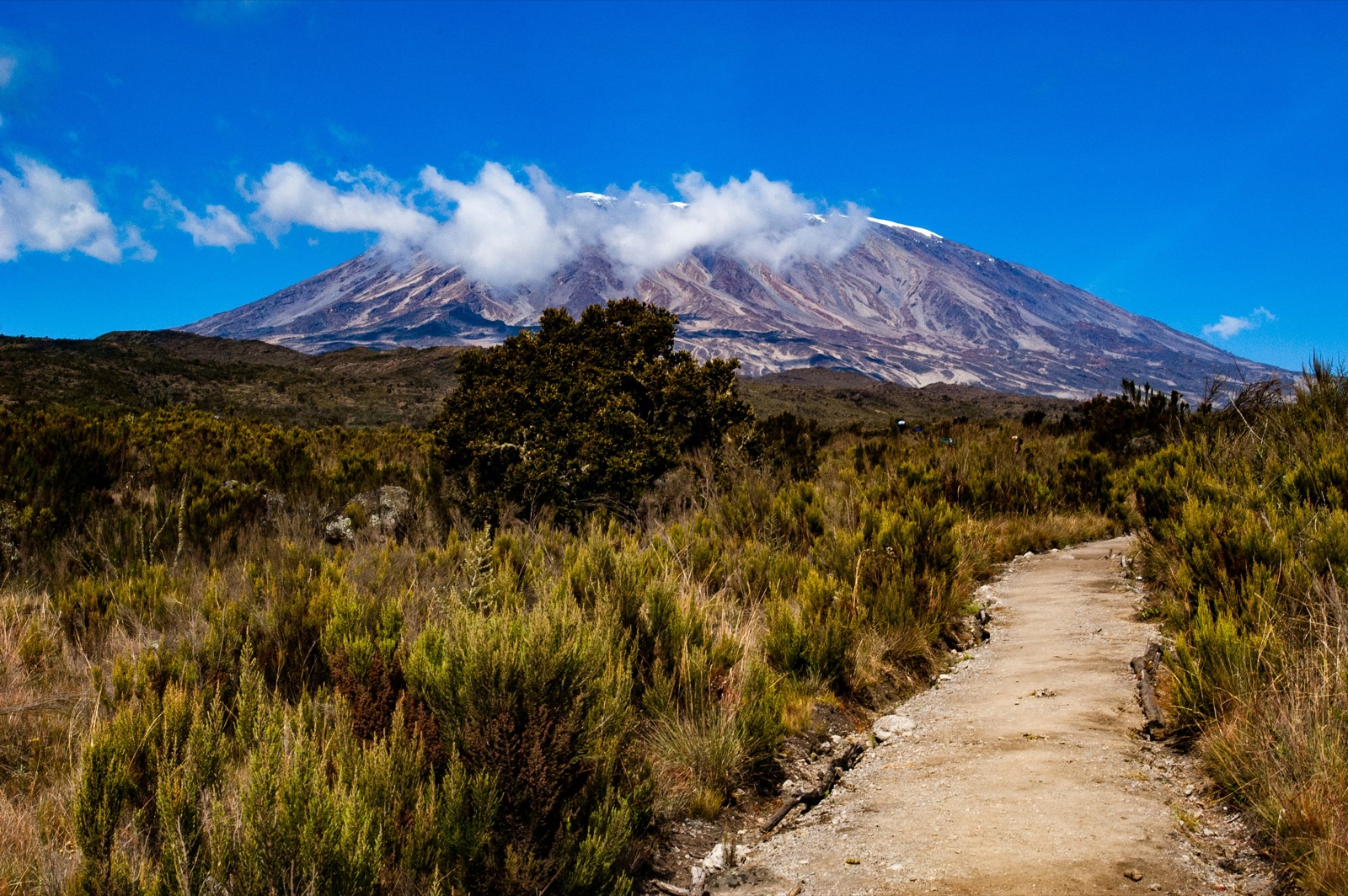
Kilimanjaro is the world’s tallest free-standing mountain, and it requires no technical climbing skill, ropes, crampons, or mountaineering experience. That democratic quality is what makes it special: teachers, accountants, and grandmothers have stood on the summit. Kilimanjaro difficulty is rated strenuous, not technical, but the altitude demands a slow pace and enough days to acclimatise. The main Kilimanjaro routes are the Machame (most scenic), Lemosho (best acclimatisation), and Marangu (the only hut route). Kilimanjaro costs with a reputable operator typically run about $2,500 to $4,500 per person. How hard is Kilimanjaro? Harder than it looks, and more rewarding than you can imagine. Don’t mistake accessible for easy: altitude humbles elite athletes and rewards patient, methodical trekkers. Add a walk through five distinct climate zones, from rainforest to alpine desert to glacier-fringed summit, and you have a mountain unlike any other.
Choose the Machame Route and Give Yourself Seven Days Kilimanjaro has seven main routes, and the Machame, nicknamed the “Whiskey Route” in contrast to the gentler “Coca-Cola” Marangu, is prized for scenery and acclimatisation. The seven-day version builds altitude gradually, and longer itineraries consistently post higher summit success rates than rushed five- or six-day climbs. You’ll trek through moss-draped cloud forest, cross the Shira Plateau with views to Mount Meru, and climb the Barranco Wall. Book with an operator that offers the seven-day option without pressure to cut corners.
Hire a Reputable Operator and Understand What Your Porters Do Licensed guides and porters are mandatory on Kilimanjaro, and for good reason. Park rules cap porter loads at 20 kilograms, excluding their own gear, yet porters are too often underpaid and poorly equipped. Choose an operator that pays fair wages, supplies proper gear, and ideally partners with the Kilimanjaro Porters Assistance Project (KPAP), whose partner list is on kiliporters.org. Tipping is expected: common guidance works out to roughly $250 to $400 per climber for a seven-day climb, depending on group and crew size. Ask your operator for its crew list and tipping recommendations before you go.
Face Summit Night Head-On The midnight push from Barafu Camp (about 4,670m) to Uhuru Peak is where the mountain shows its true character. Climbing loose scree in the dark, with wind chill that can make it feel like -20°C, is slow and deeply psychological. Acute mountain sickness (AMS) affects most climbers to some degree: headache, nausea, and exhaustion out of proportion to the effort. Many doctors prescribe Diamox (acetazolamide) to aid acclimatisation; talk to your physician before you go. The reward comes at sunrise on the crater rim at Stella Point and then at Uhuru Peak itself, a wind-scoured, glacier-fringed summit where many climbers find themselves in tears.
Gear Up Properly in Moshi The gateway town of Moshi, at the mountain’s foot, is worth a day before and after your climb. Rental shops and operators hire out fleece layers, down jackets, gaiters, and trekking poles if you don’t want to fly with a full kit, and local shops and markets stock snacks and basics. A complete layering system is non-negotiable: moisture-wicking base layers, insulating mid-layers, and a waterproof, windproof shell. Trekking poles will save your knees on the brutal descent.
In Moshi, budget travellers like Honey Badger Lodge, a relaxed lodge just outside town that is popular with climbers. Mid-range, the Kilimanjaro Crane Hotel offers straightforward, comfortable rooms and a restaurant for carb-loading before the climb. For more comfort, Kibo Palace Hotel has an upscale property in Moshi, the kind of calm you’ll dream about on night six in a tent. For post-climb beach recovery, Zanzibar is a short flight away, and for somewhere truly remote, The Manta Resort on neighbouring Pemba Island offers unforgettable decompression.
The best windows for climbing Kilimanjaro are January to mid-March and June through October, with drier conditions, clearer skies, and better summit views. July and August are peak season, so expect busier trails and book operators months ahead. January, February, and October combine good weather with thinner crowds. Avoid April, May, and November, when the long and short rains make the mountain wetter, colder, and less predictable, especially in the forest.
Fly into Kilimanjaro International Airport (JRO), which has direct flights from Amsterdam, Doha, Istanbul, Dubai, Addis Ababa, and Nairobi, among others. Dar es Salaam’s Julius Nyerere International Airport is a secondary option. Moshi is roughly 45 minutes to an hour from JRO by taxi or pre-arranged transfer, and your licensed operator handles all mountain logistics. After the climb, domestic flights connect Kilimanjaro with Zanzibar (about an hour to 90 minutes) and with Serengeti airstrips for a safari add-on.
🎒 Pack for Kilimanjaro: Trekking Poles · Headlamp · Thermal Base Layers · Packable Down Jacket · Gaiters
🗺️ Book tours & experiences in Kilimanjaro: Browse on GetYourGuide → · Browse on Viator →
🛡️ Travel insurance for this trip: Get covered with SafetyWing → 🔒 Stay secure while travelling: Get NordVPN →
The descent to Moshi, legs shaking and face windburned, feels like returning from another world, because you have. Kilimanjaro does not care about your fitness or your ambitions. It asks only that you go slowly, breathe deeply, and trust the process. In return, it gives you sunrise over the roof of Africa and the quiet knowledge that you are capable of more than you imagined. Book the flight. The mountain is waiting.