Santorini at sunrise is the island at its most extraordinary, and almost entirely yours. Here's where to be, how to beat the crowds, and why an early alarm is the right answer.
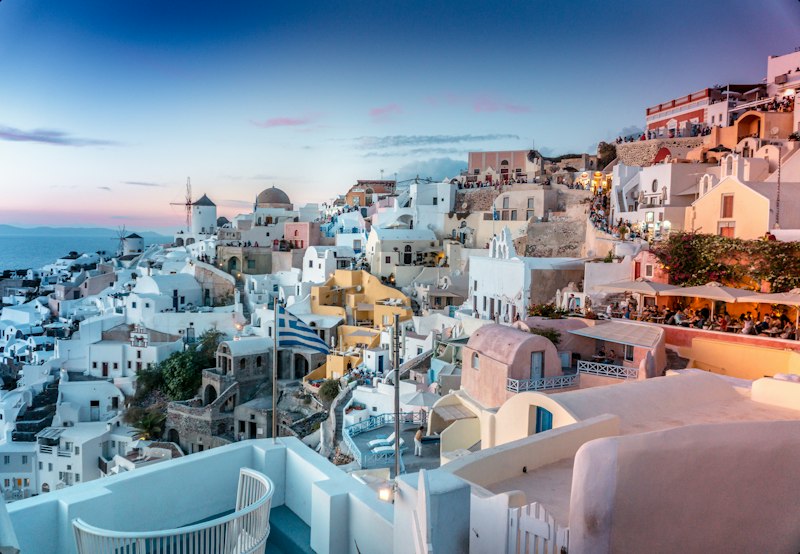
The alarm goes off before dawn, and ignoring it is tempting. But you drag yourself onto the cave hotel’s terrace and stop. The caldera stretches below like a dark mirror, the flooded crater left by the volcanic eruption that reshaped the Aegean about 3,600 years ago. A single boat blinks in the distance. The air smells of salt and wild herbs. Then, slowly, the sky over Oia turns from indigo to copper to gold, and first light catches the whitewashed walls until the whole clifftop village seems to glow from within. No crowds. No selfie sticks. Just you, a coffee going cold in your hand, and one of the most extraordinary views on earth unfolding in near silence.
Most Greek islands offer sun, sea, and seafood. Santorini adds something harder to name: a dramatic, almost cinematic beauty. The island is the rim of an ancient volcanic caldera, so its western coast drops in sheer cliffs into deep blue water, with sugar-cube houses, arched doorways, and blue-domed churches stacked along the edge. This Santorini travel guide focuses on sunrise in Oia, but the island rewards a longer stay. The best time to visit Santorini is April, May, or October: fewer crowds, lower prices, and often warm enough to swim. The famous Santorini Oia sunset draws thousands every evening in summer; sunrise is the uncrowded alternative. Add volcanic wines, dark-sand beaches, and food grown in mineral-rich soil, and slow travellers are well rewarded.
Watch the sunrise from Oia Castle. Oia is best before 7am, when the lanes belong to the cats and a handful of early risers. Walk to the ruins of the Venetian castle at the western tip of the village, find a wall to perch on, and watch the sun rise over the island behind you, washing the caldera, the windmills, and the white houses in soft gold. Arrive about half an hour before sunrise, which comes around 6:05am in June and after 7am from mid-September to March, so set the alarm for about 5:30am in summer and bring a jacket: it’s cooler than you expect. By mid-morning the same lanes fill with day-trippers, so linger over coffee from one of the first cafes to open.
Swim at Perissa and Kamari Black Sand Beaches. The island’s southeast coast holds two long stretches of dark volcanic sand that soak up the heat (bring water shoes in summer). Perissa has a livelier scene with beach bars and tavernas on the sand; Kamari is a little more polished and good for families. Between them rises the rocky headland of Mesa Vouno, topped by the ruins of Ancient Thera. Rent a sunbed, order grilled octopus, and swim.
Taste wine at Santo Wines. Santorini’s volcanic soil produces Assyrtiko, one of Europe’s most distinctive whites: bone-dry and mineral, with a citrus intensity made for seafood. Santo Wines, the island’s winemakers’ cooperative, sits on the caldera rim near Pyrgos, south of Fira, and offers tasting flights with sweeping views across the lagoon. Go early in the day before tour groups arrive, and don’t skip the Vinsanto, a sweet wine made from sun-dried grapes.
Take a boat tour to the volcano and hot springs. From the old port below Fira, half-day tours cross to Nea Kameni, where you can hike the active volcanic crater, then anchor off Palea Kameni to swim to warm, sulphurous springs that may stain a light swimsuit. Many caldera cruises also pass Red Beach near Akrotiri, whose rust-red cliffs are prone to rockfalls and are best admired from the water. Book an early departure for a calmer experience.
Dine on the cliff at Imerovigli. Quieter Imerovigli, one of the highest villages on the caldera rim, offers cliff-edge dining without Oia’s premium. Order the local specialties: fava, a silky purée of the island’s yellow split peas; tomatokeftedes (fried tomato fritters that taste far better than they sound); and fresh grilled fish with lemon. At sunset, the whole caldera turns amber.
Budget, Fira and the beaches: Fira is the island’s busy hub and the easiest base for buses and ferries, with simple guesthouses and hostels well below caldera-view prices. Kamari and Perissa offer good-value beach hotels a short bus ride away.
Mid-range, Aroma Suites, Fira: Perched on the caldera rim with cave-style rooms and private terraces, Aroma Suites delivers the classic Santorini view for far less than Oia’s top hotels. Rates rise sharply in July and August.
Luxury, Canaves Oia Suites: A benchmark for Santorini luxury, with dazzling white suites, caldera views, and a cave spa. Peak-season rates can run well over €1,000 a night, but for a honeymoon or milestone trip, few places on earth compete.
May and October are the sweet spots. In May the island is waking up after winter, temperatures are comfortably warm (typically in the low to mid 20s °C), and prices sit well below July levels. October keeps the warm sea of late summer with fewer visitors. July and August bring peak crowds, cruise ships lined up in the caldera, and temperatures regularly above 30°C. In high summer, book months ahead and head out early.
Santorini (Thira) International Airport (JTR) has direct flights from many European cities in summer, including budget carriers such as Ryanair and easyJet, plus year-round flights from Athens. By sea, ferries from Piraeus take anywhere from about five hours on high-speed boats to eight hours on conventional ships like Blue Star Ferries, whose deck-class tickets are one of the cheapest ways to arrive. On the island, KTEL public buses connect Fira with most villages and beaches for a few euros per ride. For flexibility, rent a small car or ATV; the island is compact enough to circle in a day.
🎒 Pack for Santorini: Reef-Safe Sunscreen SPF 50 · Comfortable Walking Sandals · Compact Travel Camera · Portable Charger · Lightweight Evening Wrap
🗺️ Book tours & experiences in Santorini: Browse on GetYourGuide → · Browse on Viator → 🏛️ Akrotiri ancient ruins guided tour: Book on Klook →
🛡️ Travel insurance for this trip: Get covered with SafetyWing → 🔒 Stay secure while travelling: Get NordVPN →
Santorini has been photographed a million times, and it still hits differently in person: the caldera at first light, a glass of cold Assyrtiko later in the day, the smell of thyme on the morning air. Set the early alarm. Stay a day longer than you planned. From the right clifftop, the world feels both enormous and perfectly manageable.