Ho Chi Minh City (Saigon) is Vietnam's fastest, most electric city: French colonial architecture, powerful war history, and a street food culture that runs from dawn past midnight. Here's how to spend 3 days in Saigon properly.
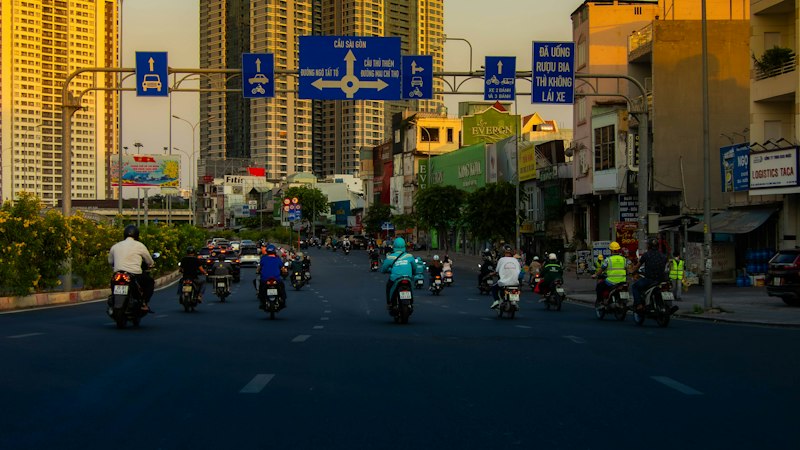
This ho chi minh city travel guide covers the saigon travel guide essentials: the best things to do in ho chi minh city, the food, the war history, and how to spend 3 days in saigon properly. Saigon hits differently from any other city in Vietnam. Where Hanoi is dense and layered, Saigon is vast and electric, a metropolis of well over 10 million people moving at a speed that makes other cities feel sleepy. The motorbike traffic is somewhere between a river and a force of nature. The food scene runs from dawn until well past midnight. French colonial boulevards look almost absurdly elegant beside the glass towers and neon pressing in from every side. And threading through everything is a history so recent and so immense that the city is still absorbing it.
The city has officially been Ho Chi Minh City since 1976, but Saigon is the name you’ll hear in conversation, on menus, and on signs, especially for the historic centre. Few renamed cities keep their old names so stubbornly.
Most travellers pass through Saigon at the end of a Vietnam trip, spend two nights, and leave wishing they’d booked three. The city rewards time. The war ended here in 1975, within living memory, and the evidence is everywhere: in the War Remnants Museum and in the palace whose gates North Vietnamese tanks broke through. That weight sits alongside one of Asia’s most vibrant food cultures, a café scene built on strong iced coffee, and a pace that wears you out and exhilarates you in equal measure.
The most important thing to do in Saigon, and the most difficult. The War Remnants Museum documents the American War from the Vietnamese perspective: photographs of civilian casualties, military hardware, recreated prison cells, and harrowing galleries on the multi-generational effects of Agent Orange. It is explicitly partisan and often graphic. It is also essential. Allow two hours. Entry is about 40,000 VND ($1.50).
The seat of the South Vietnamese government until 30 April 1975, when North Vietnamese tanks crashed through its front gate and the war ended. Much of it is preserved as it was: the basement war room with its communications equipment, 1960s state rooms, and the rooftop helipad. Walking through it is surreal. Open daily 7am to 6pm; entry costs 80,000 VND (about $3). Allow 90 minutes.
Ben Thanh Market is Saigon’s most famous market and very much a tourist destination, with pushy vendors and prices to match. Bargain firmly, or head a short walk east to the Old Market (Cho Cu) around Ton That Dam Street, where locals shop for produce and dry goods. After dark, Ben Thanh’s surrounding streets fill with food stalls.
The Cu Chi Tunnels, about 1.5 to 2 hours northwest of the centre by road, are best visited on a half-day morning tour. Part of a network of roughly 250 kilometres, the tunnels sheltered Viet Cong fighters and villagers during the war. Visitors can crawl through short, widened sections, and even a few metres in the tropical heat makes clear what living underground for years must have meant. The site also displays a destroyed American tank, bomb craters, and wartime booby traps. Tours depart District 1 early and are back by early afternoon; book through a reputable operator.
Two of Saigon’s finest colonial buildings face each other on Cong Xa Paris Square. The red-brick Notre-Dame Cathedral was built by the French between 1877 and 1880, with its twin bell towers added in 1895. It has been under a long restoration since 2017, so expect scaffolding and limited access to the interior. Beside it, the Central Post Office (1886 to 1891), designed by colonial architect Alfred Foulhoux (not Gustave Eiffel, as is often claimed), is still a working post office: a vast arched hall with a portrait of Ho Chi Minh at one end. Entry is free.
Mekong Delta day trips from Saigon range from excellent to perfunctory depending on the operator. My Tho, about 1.5 hours away, offers river village sampan rides and coconut candy workshops. If time allows, go overnight to Can Tho (about 2.5 to 3 hours on the expressway), where the Cai Rang floating market at dawn feels far less staged than the day-trip alternatives. Group overnight tours usually include transport, accommodation, and breakfast; compare inclusions before booking.
Watching the skyline light up as the sun drops is one of Saigon’s great pleasures. Chill Skybar on the 26th floor of AB Tower (Le Lai Street, District 1) charges for drinks, not the view, and the view is extraordinary. Level 23 at the Sheraton Saigon and the Saigon Saigon Rooftop Bar at the Caravelle are classic alternatives.
Saigon’s food is richer and sweeter than Hanoi’s, shaped by the Mekong Delta’s produce and by the Chinese-Vietnamese (Hoa) community centred in Cholon (District 5). Something delicious is available at almost any hour.
Com tam (broken rice): The definitive Saigon breakfast. Broken rice with grilled pork chop, shredded pork skin, steamed egg meatloaf, pickles, and fish sauce. About $1.50 to $2.50 at a street stall, served from early morning. Look for “com tam suon” on handwritten signs.
Banh mi: Saigon’s banh mi is generously filled, with a soft interior and crackly crust. Banh Mi Hoa Ma at 53 Cao Thang, District 3, has been serving breakfast banh mi op la (eggs in a pan with bread) since 1958. It closes by late morning.
Hu tieu: Saigon’s answer to pho: rice or egg noodles with pork, shrimp, and a clear, slightly sweet broth. Best from neighbourhood stalls in Districts 3 and 5.
Banh xeo (sizzling crepe): A crispy turmeric crepe the size of a dinner plate, filled with shrimp, pork belly, and bean sprouts, eaten wrapped in mustard leaves and herbs with fish sauce. Banh Xeo 46A on Dinh Cong Trang Street is the city’s best-known address. About $4 to $6.
Che (dessert soups): Sweet mixes of beans, jellies, coconut milk, and tropical fruit, often over crushed ice. Best from street carts in the late afternoon. Around $1.
Coffee: Vietnamese iced coffee with condensed milk (ca phe sua da) is a southern staple: strong robusta dripped over sweetened condensed milk and ice. Order it anywhere; Highlands Coffee is a reliable, air-conditioned chain when you need a rest.
Budget: The backpacker streets around Pham Ngu Lao and Bui Vien are packed with inexpensive guesthouses and hostels. Choose one on a side lane if you want sleep.
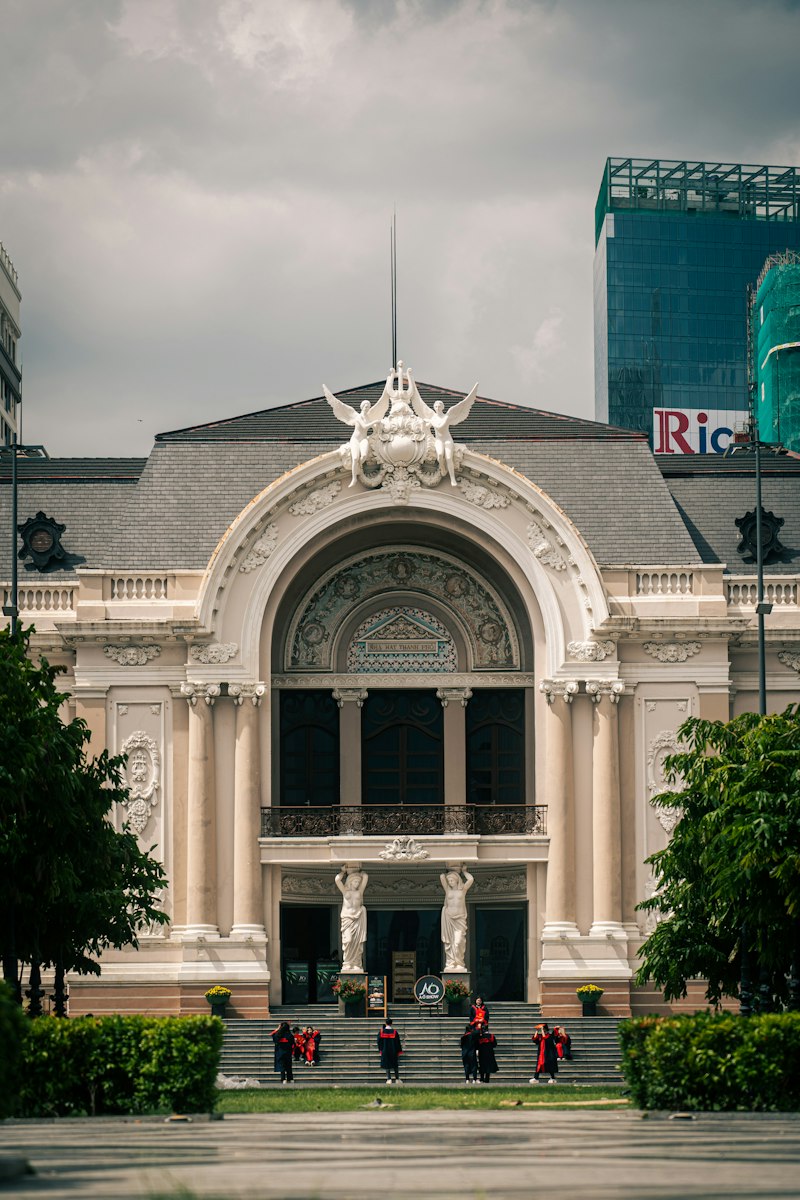
Mid-range: The Myst Dong Khoi: a design-led hotel in central District 1 with a rooftop pool, within walking distance of the Opera House and riverfront.
Hotel des Arts Saigon (MGallery): a boutique hotel on Nguyen Thi Minh Khai with a rooftop pool and bar and strong city views.
Upscale: Caravelle Saigon: a landmark on Lam Son Square, opposite the Opera House, opened in 1959. It housed foreign news bureaus during the war, and its Saigon Saigon Rooftop Bar is a local institution.
Splurge: Park Hyatt Saigon: the city’s classic luxury address, next to the Opera House, with a garden pool and excellent restaurants.
December to April is the dry season: hot (around 30 to 35°C), sunny, and relatively comfortable. December to February is the most pleasant stretch.
May to November is the rainy season, with heavy afternoon downpours that usually clear within a couple of hours. Hotels are cheaper and the city slightly quieter.
Tet (Lunar New Year): Falls in late January or February. The city empties as people head to their hometowns, and many restaurants and businesses close for several days. Atmospheric but logistically inconvenient.
Tan Son Nhat International Airport is about 7 kilometres from District 1, and its new domestic Terminal 3 opened in 2025. A Grab takes 20 to 45 minutes depending on traffic and typically costs 150,000 to 250,000 VND; for metered taxis, use Mai Linh or Vinasun. The new Long Thanh International Airport, about 40 kilometres east of the city, is scheduled to open to commercial flights in December 2026, so check which airport your ticket uses.
Metro Line 1, which opened in December 2024, runs 14 stations from Ben Thanh to Suoi Tien in Thu Duc, with fares of about 7,000 to 20,000 VND. It does not serve the airport, but it is a fun, air-conditioned ride east past the Saigon River. Otherwise, Grab is the easiest way around. Walking works within District 1, but distances between neighbourhoods are deceptive and the heat is real.
🎒 Pack for Ho Chi Minh City: Quick-Dry Travel Clothing · Anti-Theft Crossbody Bag · Travel Umbrella Compact · Insect Repellent DEET · Portable Neck Fan
🗺️ Book Ho Chi Minh City tours and experiences: Cu Chi Tunnels half-day tour on GetYourGuide Saigon street food evening tour on GetYourGuide Mekong Delta tours on Viator HCMC experiences on Klook
🛡️ Travel insurance for Vietnam: Get covered with SafetyWing → 🔒 Stay secure on public Wi-Fi: Get NordVPN →
Saigon is the city that moves fastest and stays with you longest. The history is enormous and immediate, the food extraordinary, and the pace will exhaust you in the best possible way. Give it three nights minimum. Order com tam from a street stall at 7am. Watch the motorbikes fill an intersection and move together in impossible choreography. Eat banh xeo at a plastic table under a tarp while the rain falls. That is Saigon: completely its own thing.