Lisbon travel guide essentials: the best things to do in Lisbon, where to stay in Lisbon, what to eat, Tram 28, Belém, and the best day trips from Lisbon. Portugal’s capital spreads across seven hills above the Tagus River, and almost every walk ends at a miradouro (viewpoint) with terracotta rooftops tumbling down to the water.
Lisbon is one of Western Europe’s oldest capitals and one of its most relaxed. A great earthquake levelled much of the city in 1755, and the grid of the Baixa was rebuilt on top of the rubble, while Alfama’s Moorish lanes survived above it. The result is a city of two moods: grand squares and wide avenues down by the river, and tangled alleys, laundry lines, and fado bars up on the hills.
For the wider country, including Porto, the Douro Valley, and the Algarve, see our Portugal travel guide.
Why Lisbon Belongs on Your Bucket List
Lisbon gives you the history, food, and beauty of a major European capital at a gentler pace and a lower price than Paris, Rome, or Barcelona. It is compact enough to explore on foot (if your legs are ready for the hills), the light off the river is famous among photographers, and a pastry and coffee still costs a few euros. It is also one of the easiest cities in Europe for a first solo trip; see our guide to the safest countries for solo female travelers.
Best Things to Do in Lisbon
Alfama and the Castelo de São Jorge
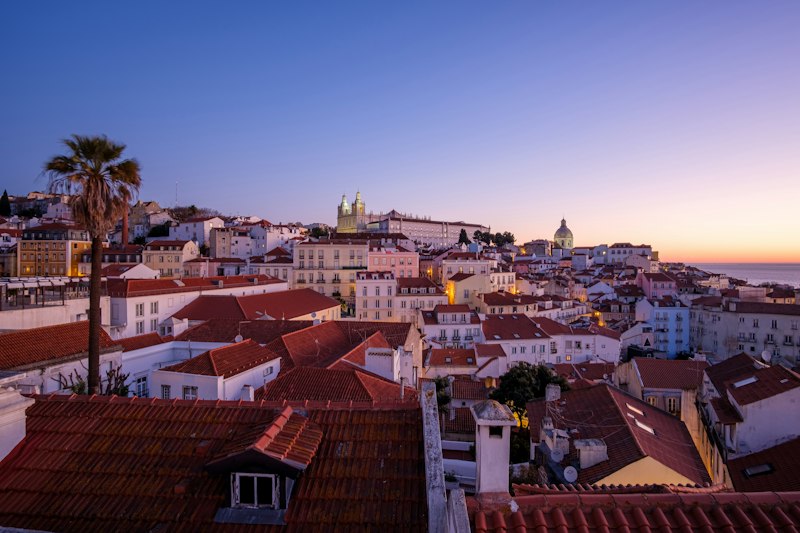
Alfama is Lisbon’s oldest neighbourhood and the best place to get lost on purpose. Wander the stairways between Sé Cathedral and the Miradouro de Santa Luzia, then continue to the Miradouro das Portas do Sol for the classic view over the rooftops and river.
At the top of the hill, the Castelo de São Jorge has ramparts with some of the widest views in the city. Adult tickets cost €17 in 2026 (youth 13 to 25 pay €8.50, and under-12s enter free). Go at opening or late afternoon to avoid the midday crowds.
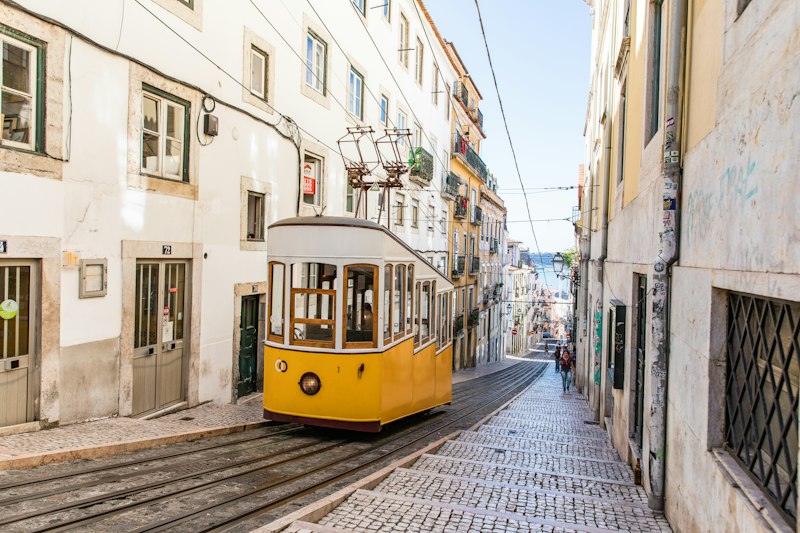
Ride Tram 28 (the smart way)
The vintage yellow Tram 28 rattles from Martim Moniz through Graça, Alfama, Baixa, and Estrela to Campo de Ourique. It is charming, but it is also crowded and a well-known pickpocket zone.
- Board at Martim Moniz early (before 9am) for a seat.
- Don’t pay on board: a ticket bought from the driver is €3.30 and cash only. Load a Navegante card instead (€1.90 per ride) or buy the 24-hour Carris/Metro pass (€7.25), which covers trams, buses, and the metro.
- Keep your bag in front of you and your phone out of your back pocket.
A note on Lisbon’s famous funiculars: after the Elevador da Glória derailed in September 2025, killing 16 people, the city suspended its historic funiculars. Glória is being rebuilt, and Bica and Lavra had no reopening date at the time of writing. The small Graça funicular reopened in April 2026. The Santa Justa Lift has also had closures since then, so check carris.pt before you go. You can get almost the same view over Baixa for free by walking up to Largo do Carmo and onto the lift’s upper walkway.
Baixa, Chiado, and Praça do Comércio
Walk down Rua Augusta, the pedestrian street of the rebuilt Baixa, through the triumphal arch to Praça do Comércio, the enormous riverside square where ships once unloaded the riches of Portugal’s empire. Climb into Chiado for its old cafés, bookshops, and theatres. Bertrand in Chiado, founded in 1732, is recognised as the world’s oldest operating bookshop.
Belém: Monastery, Tower, and Custard Tarts
Belém, about 6 km west of the centre, is where Portugal’s Age of Discovery is written in stone. Take tram 15E from Praça da Figueira or Praça do Comércio.
- Jerónimos Monastery: a masterpiece of Manueline architecture and the resting place of Vasco da Gama. Entry to the church is free; the cloister costs €18. It is closed on Mondays.
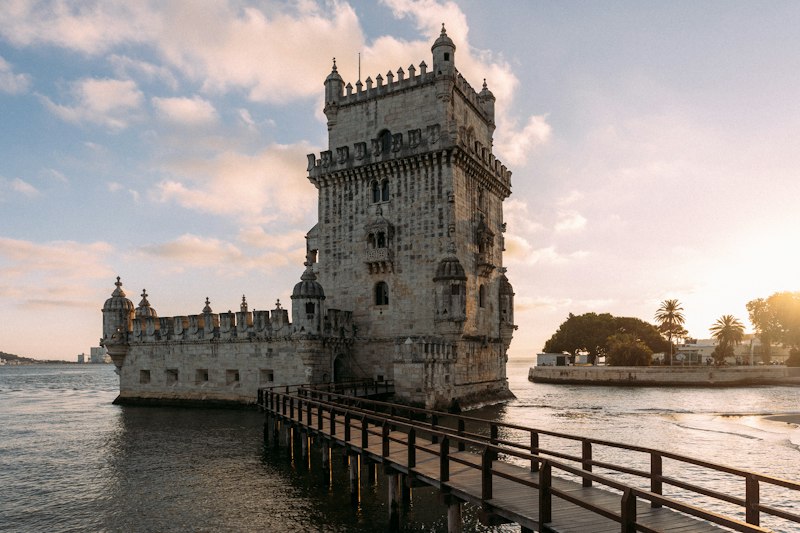
- Belém Tower: the 16th-century riverside fortress reopened on 27 May 2026 after a year of restoration, with a new timed-entry system (a maximum of 60 visitors every 30 minutes). Tickets are €15, and it is open Tuesday to Sunday, 9:30am to 5:30pm. Book online to guarantee a slot.
- MAAT: the Museum of Art, Architecture and Technology, with its wave-shaped roof you can walk on, sits on the riverfront between the two.
- Pastéis de Belém: the bakery that has been making its secret-recipe custard tarts since 1837. Expect about €1.50 per tart. The takeaway queue moves fast; the seated rooms inside are huge and often quicker than they look.
Lisbon’s Best Viewpoints
Lisbon’s miradouros are free and open all day.
- Miradouro da Senhora do Monte: the highest viewpoint in the city, with a sweeping panorama and the castle straight ahead. Best at sunset.
- Miradouro da Graça (Sophia de Mello Breyner Andresen): pine trees, a kiosk café, and a relaxed local crowd.
- Miradouro de São Pedro de Alcântara: a garden terrace in Bairro Alto looking across to the castle.
- Miradouro de Santa Catarina: a sunset favourite with views to the 25 de Abril Bridge.
Museums Worth Your Time
- National Tile Museum (Museu Nacional do Azulejo): five centuries of Portuguese tiles in a former convent, including a 23-metre panorama of pre-earthquake Lisbon. About €8.
- Calouste Gulbenkian Museum and CAM: a world-class private collection from ancient Egypt to Lalique, plus a modern art centre in a garden designed by Kengo Kuma. Check gulbenkian.pt for current ticket combinations.
- Oceanário de Lisboa: one of Europe’s largest aquariums, in Parque das Nações. Prices vary by entry time (from €25 for late afternoon to €29 in the morning), so book a later slot to save.
Fado Night
Fado, Portugal’s melancholy folk music, is on UNESCO’s list of Intangible Cultural Heritage. For a relaxed, unpolished night, try A Tasca do Chico in Bairro Alto, where amateurs take turns singing (there’s no cover charge, but you’re expected to order drinks). For a sit-down dinner with professional singers, Alfama has several fado houses; expect a minimum spend, and stay quiet while the music plays.
LX Factory
Under the 25 de Abril Bridge in Alcântara, a 19th-century industrial complex is now full of cafés, design shops, street art, and restaurants. Sunday brings a flea market. Don’t miss Ler Devagar, a bookshop set in an old printing hall.
What to Eat in Lisbon

- Pastel de nata: the custard tart. Beyond Belém, Manteigaria (in Chiado and at Time Out Market) is the local favourite; watch them come out of the oven.
- Bifana: a thin pork steak in garlic and white wine, stuffed into a soft roll. Cheap, fast, and excellent.
- Bacalhau: salted cod, cooked in endless ways. Try bacalhau à Brás (shredded with egg, onion, and straw potatoes).
- Grilled sardines: at their best in June, when the Santo António festivities fill Alfama with smoke and music.
- Seafood: Cervejaria Ramiro near Intendente is a Lisbon institution for garlic prawns, clams, and crab. Expect a queue; it’s worth it.
- Ginjinha: a sour cherry liqueur served by the shot from tiny bars near Rossio.
- Time Out Market Lisboa: a food hall inside the Mercado da Ribeira at Cais do Sodré, with stalls from well-known local chefs. Touristy, but a good way to sample a lot in one stop.
Where to Stay in Lisbon
Budget: The Independente Hostel & Suites sits in a former ambassador’s residence between Príncipe Real and Bairro Alto, with dorms, private suites, a restaurant, and a garden.
Mid-range: Stay in Baixa or Chiado for flat walking, easy metro access, and everything within reach. These central neighbourhoods have a good spread of boutique hotels and apartments.
Luxury: Bairro Alto Hotel is the classic Lisbon boutique splurge, in an 18th-century building on Praça Luís de Camões with a rooftop terrace overlooking the river.
Which neighbourhood? Baixa and Chiado are the most convenient for a first visit. Alfama is the most atmospheric but steep and noisy on fado nights. Príncipe Real is leafy and stylish. Avoid staying right in Bairro Alto if you want sleep: its streets are the city’s open-air nightlife district.
Rates swing widely by season, so compare dates before you book. Lisbon charges a tourist tax of €4 per person per night (ages 13 and up, capped at seven nights), usually paid at your accommodation.
Best Day Trips from Lisbon
- Sintra: fairytale palaces in the hills, about 40 minutes by train from Rossio station. Pena Palace, the Moorish Castle, and Quinta da Regaleira need timed tickets, so book ahead and go midweek.
- Cascais: a seaside town with beaches and an old centre, 33 to 45 minutes by train from Cais do Sodré (€2.55 each way on a Navegante card). Stop at Belém on the way, since the line runs along the river.
- Setúbal and Arrábida: south across the river, with some of the clearest water and prettiest beaches near Lisbon.
Getting to and Around Lisbon
From the airport: Lisbon’s Humberto Delgado Airport (LIS) is close to the city. The red metro line runs from Aeroporto station into town in about 25 to 35 minutes for €1.90 on a Navegante card (the card itself costs €0.50). Taxis and Uber are also inexpensive.
Getting around: Walk as much as you can, and use the metro, trams, and buses for the hills. A 24-hour Carris/Metro pass is €7.25.
Lisboa Card: the official city pass costs €31 for 24 hours, €51 for 48 hours, or €62 for 72 hours, and includes public transport, the train to Sintra and Cascais, and free or discounted entry to many sights (including Jerónimos, Belém Tower, and the castle). It pays off if you plan two or more paid sights a day.
Best Time to Visit Lisbon
March to June and September to October are ideal: warm, sunny days and fewer crowds than midsummer. June brings the Santo António festivals and grilled sardines on every corner. July and August are hot and busy, with higher hotel prices. Winter is mild and quiet, with some rain, and a good time to find hotel deals.
Practical Tips
- Shoes: Lisbon’s polished limestone pavements (calçada) get slippery, especially when wet or downhill. Wear shoes with good grip.
- Pickpockets: watch your belongings on Tram 28, in Baixa, and around Rossio and Martim Moniz.
- Street sellers: people quietly offering “hashish” in Baixa are selling fakes. Just keep walking.
- Couvert: bread, olives, and cheese placed on your table at restaurants are not free. Send them back if you don’t want to pay for them.
- Entry: US, UK, Canadian, and Australian visitors can stay 90 days in the Schengen area within any 180-day period. The EU Entry/Exit System now registers non-EU travellers’ fingerprints and photo on arrival, so allow extra time at passport control.
🎒 Pack for Lisbon: Walking Shoes with Good Grip · Anti-Theft Crossbody Bag · Lightweight Daypack · Portable Charger · Europe Travel Adapter
🏨 Find hotels in Lisbon: Search on Booking.com →
This section contains affiliate links. If you book through them, we may earn a commission at no extra cost to you.
🗺️ Book Lisbon tours and experiences: Browse on GetYourGuide → · Browse on Viator → 🍽️ Lisbon food tour: Book on Klook → 🏰 Sintra palaces day trip from Lisbon: Book on Klook →
🛡️ Travel insurance for Portugal: Get covered with SafetyWing → 🔒 Stay secure on public Wi-Fi: Get NordVPN →
Lisbon rewards slow travel: a coffee at a kiosk under the pines, one more viewpoint at sunset, one more custard tart than you planned. Give it at least three days, bring shoes that can handle the hills, and leave room to wander.
You Might Also Like
- Portugal Travel Guide: Europe’s Most Underrated Destination: Take your trip beyond Lisbon to Porto, the Douro Valley, and the Algarve.
- Santorini Sunrise: Best Viewpoints & Why to Wake Up at 5:30am: Another European city built for golden-hour views.
- Rome Travel Guide: Colosseum, Vatican, Food & Best Things to Do in 3 Days: Continue your European city break in Italy.